CPVC PIPES About
Heat Resistant Up To 93C Flowing Hot Water
Ashirvad Chlorinated polyvinyl chloride (CPVC) is a thermoplastic ideal for use in plumbing, sanitary, and potable hot and cold water applications. Its heat-defying, anti-corrosion qualities make it suitable for all weather conditions across applications for residential and commercial plumbing systems across the world for more than 50 years.
Outstanding Fire ResistanceCPVC pipes are self-extinguishing and do not support combustion, making them a safer choice for installations where fire hazards are a concern. Their fire-resistant properties provide peace of mind for both residential and commercial plumbing systems, meeting stringent safety requirements and standards.
Exceptional Chemical and Corrosion ResistanceDesigned for durability, CPVC pipes demonstrate high resistance against a broad range of chemicals, including acids, bases, and salts. Their robust composition ensures they do not corrode, rust, or scale over time, supporting longevity and maintaining water quality for decades under normal working conditions.
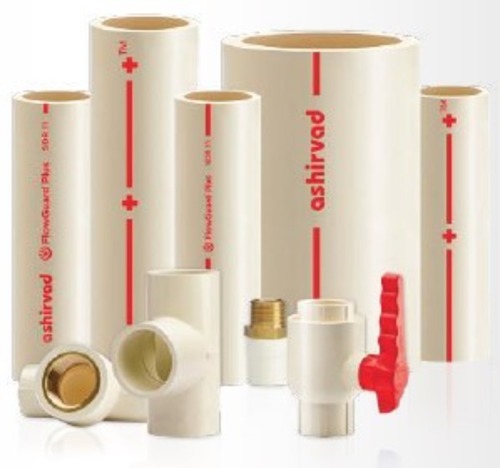
Ease of Installation and Versatile FittingsThanks to their light weight and straightforward solvent weld joining system, CPVC pipes can be installed quickly and efficiently. A comprehensive range of compatible fittings-including elbows, tees, valves, adapters, and unions-provides reliable connections and flexibility to address diverse plumbing layouts and requirements.
FAQ's of CPVC PIPES:
Q: How are CPVC pipes installed and what are the recommended connection types?
A: CPVC pipes are typically installed using the easy solvent weld joining method, which ensures leak-proof connections. For certain applications, threaded joints-using either NPT or BSP threads-are also available. Bending is not recommended; fittings such as elbows or tees should be used to navigate changes in direction.
Q: What benefits do CPVC pipes offer for potable water supply and plumbing systems?
A: CPVC pipes are certified to meet potable water standards, ensuring safety for drinking water use. Their resistance to corrosion, scaling, and bacterial growth helps maintain water purity, while their high hydraulic efficiency allows for minimal friction loss in hot and cold water plumbing systems.
Q: Where can CPVC pipes be used, and which applications are most suitable?
A: CPVC pipes are suitable for both residential and commercial plumbing, especially for hot and cold water supply lines. Thanks to their chemical and UV resistance, they perform well in both indoor and outdoor installations requiring robust, long-lasting performance.
Q: What is the lifespan of CPVC pipes and how much maintenance do they require?
A: CPVC pipes have a life expectancy of over 50 years when used under normal operating conditions. They require very low maintenance due to their resistance to corrosion, scale build-up, and microbial growth on internal surfaces.
Q: How does UV stabilization affect the use of CPVC pipes outdoors?
A: For specific CPVC grades with UV stabilization, the pipes resist degradation from sunlight, making them suitable for exposed outdoor installations. It is important to select the appropriate UV-resistant grade for outdoor use to preserve durability.
Q: What types and sizes of fittings and pipes are available for CPVC systems?
A: A full range of fittings is available, including elbows, tees, valves, adapters, and unions, ensuring versatility for various plumbing layouts. Pipe diameters range from 15 mm to 50 mm (or larger as per manufacturer), in standard lengths such as 3, 5, or 6 meters.








 Send Inquiry


 Send Inquiry